
Retaining walls aren’t just garden backdrops. They’re more like the engineers of your yard, taming erosion, directing stormwater, and carving usable space on stubborn slopes.
Here’s the catch: Minnesota winters are brutal on outdoor structures. The wrong wall material will crack, lean, or rot within years. The right one, properly installed, can last half a century or more.
This guide breaks down the most common retaining wall materials, their costs, pros and cons, and how each performs in Minnesota’s unforgiving freeze-thaw cycles. By the end, you’ll know exactly which material is the best fit for your yard.
Factors to Consider Before Choosing a Retaining Wall Material
Here’s the bottom line: The best retaining wall for Minnesota isn’t always the prettiest or the cheapest, it’s the one that can survive moisture, frost, and heavy soil pressure. That said, a long lasting retaining wall can also look great with the right material. Let’s take a look at our factors:
- Climate resilience: Our winters mean expansion and contraction on repeat. Materials that can’t handle it will fail fast.
- Moisture resistance: Clay-heavy Minnesota soils trap water. Wood rots. Low-grade brick spalls. Weak mortar crumbles.
- Durability vs. aesthetics: Decide whether the wall should blend quietly into the landscape or also serve as a design feature.
- Upfront vs. long-term cost: Timber is cheap now, but replacing it in 12 years costs more than stone that lasts 50.
- Load-bearing vs. decorative: A small garden edge doesn’t need the same muscle as a six-foot wall holding back a driveway.
- Maintenance needs: Some walls need staining and sealing; others are nearly maintenance-free once built right.
Types of Retaining Wall Materials (with Pros & Cons)
1. Concrete Block
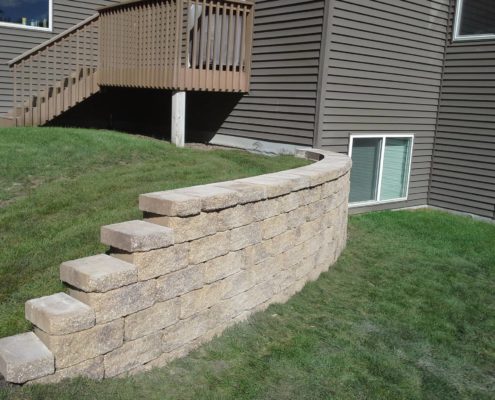
If you want a reliable wall that balances cost and durability, concrete block is your best bet.
- Pros: Affordable, modular, easy to stack, and available in multiple textures and colors. Performs well in freeze-thaw cycles with proper drainage.
- Cons: Boxy, utilitarian look unless dressed up with veneer. Needs a solid base to prevent shifting.
- Estimated Cost (per sq. ft.): $20-$35 (with installation)
When paired with frost-protected footing and proper drainage, block walls can remain straight and stable for decades, even after multiple harsh winters. Concrete block is a great middle ground for cost effectiveness and functionality.
2. Poured Concrete

For sheer strength, poured concrete is unmatched, but it comes with risks if poorly engineered.
- Pros: Polished, modern aesthetic. Extremely durable. Can be stamped, stained, or textured. Low maintenance.
- Cons: High installation cost. Hairline cracks develop without expansion joints. Difficult to repair if damaged.
- Estimated Cost (per sq. ft.): $25-$40 (with installation)
Poured concrete is a sleek and durable option. Keep in mind, drainage and control joints are non-negotiable for winter survival. We highly recommend bringing in professionals for the installation of poured concrete retaining walls due to the technical skill required.
3. Natural Stone

Natural stone is the Cadillac of retaining walls: timeless, rugged, and nearly permanent.
- Pros: Unmatched beauty. Blends seamlessly with landscaping. Extremely durable, often lasting generations.
- Cons: Highest upfront cost. Heavy labor and skilled masons required. Slow to install.
- Estimated Cost (per sq. ft.): $25-$70 (with installation)
For natural stone walls, choosing the right type of stone is key. Granite and limestone are all-stars here, resisting frost heave year after year. Fieldstone can be equally strong if properly set. Natural stone retaining walls can be an expensive option (at least up front), but for durability and a timeless look, they’re undefeated.
4. Timber/Wood

Timber delivers a rustic look and budget-friendly price tag, but it’s the least durable choice for Minnesota.
- Pros: Warm, natural aesthetic. Inexpensive upfront. Relatively easy to build.
- Cons: Rot, insect damage, and warping are inevitable. Even treated lumber eventually breaks down.
- Estimated Cost (per sq. ft.): $15-$30 (with installation)
Timber walls can look charming for a decade, but once snowmelt seeps in, it’s a ticking clock. Although they’re typically the cheapest to install, timber retaining walls are not a great option for Minnesota homeowners. You can expect 10-20 years of life at best.
5. Brick

Brick brings a classic, traditional look, but it’s not without risks in cold climates.
- Pros: Elegant appearance, strong structure, and long-lasting when properly built.
- Cons: Labor-intensive, costly, and vulnerable to spalling when moisture penetrates during freeze-thaw.
- Estimated Cost (per sq. ft.): $30-$45 (with installation)
Brick retaining walls are a charming option, but they do rely heavily on the integrity of their mortar and repairs can be difficult. Only frost-resistant brick and mortar should be used here. Without it, cracks are inevitable.
6. Gabion

Gabions (steel cages filled with rock) may not win beauty contests, but they’re nearly indestructible.
- Pros: Highly durable, naturally drains water, prevents erosion, and can be filled with recycled stone. Virtually maintenance-free.
- Cons: Industrial look doesn’t suit all homes. Professional installation recommended for large projects.
- Estimated Cost (per sq. ft.): $25-$50 (with installation)
Gabion retaining walls are practically bulletproof on steep or erosion-prone lots and have great natural drainage. Freeze-thaw cycles don’t faze them.
Our Top Retaining Wall Material: Natural Stone
If budget allows, Natural Stone takes the cake as the best all-around retaining wall material.
The runner up is concrete block since it offers a great balance between durability and cost.
Ultimately, though, each of these materials can have their place depending on budget, style preferences, and your yard’s needs.
How to Choose the Best Retaining Wall Material for Your Yard
It’s best to start with function, then factor in style and long-term costs.
- Function first: Garden edging? Timber is probably fine. Holding up a driveway? Use stone or concrete.
- Think long-term: Stone is costly upfront, but it outlasts cheaper timber by decades.
- Matching style to your home: For example, you may consider poured concrete for a modern home vs. brick for a colonial-style home.
- Drainage is everything: Even the strongest wall collapses without water management.
- Consult a professional: Most failures we see in Minnesota aren’t material flaws. They are typically related to drainage mistakes or frost-depth errors during DIY builds.
FAQs About Retaining Wall Materials
Which retaining wall material lasts the longest in Minnesota?
- Natural stone and reinforced poured concrete typically last the longest, often 50+ years with little maintenance.
What’s the cheapest retaining wall material?
- Timber is cheapest upfront, but concrete block offers the best balance of affordability and lifespan.
Do I need a permit to build a retaining wall in Minnesota?
- Most municipalities require permits for walls over 4 feet tall, and some need engineering approval. Always check local codes.
Can I combine materials (e.g., block core with stone veneer)?
- Yes. In fact, it’s common. With this build you get the strength of block with the high-end look of stone.
How tall can I build a retaining wall without engineering?
- Generally up to 4 feet, but local requirements vary. Anything taller should be engineered for safety.
Final Thoughts: Build It Once, Build It Right
Choosing the right material is only half the battle. Installation determines whether your wall stands strong or leans within a few seasons. Missing drainage and poor base prep are the top reasons walls fail, especially where freeze-thaw cycles wreak havoc. If you want a retaining wall that’s both beautiful and durable consider hiring professionals who understand engineering and climate challenges.
At Buck Landscaping, we’ve built retaining walls throughout the Twin Cities for over a decade that look good and are built to last. Call 763-447-9547 today to get a free estimate on your retaining wall project.

Recent Comments